Camp
Camping from an ATV
ATV camping setup: core kit, packing and weight distribution against rack ratings, trailers, tent, cot and kitchen set-ups, water, Leave No Trace and where you can camp in Utah.
Quick answer
Think backpacking gear, not car camping. A one- or two-person tent, a compact sleep system, a small canister stove and enough water for the dry country you are in fit in two dry bags and a rear box on most mid- to big-bore ATVs, staying under the rack ratings.
Product links may be affiliate links; we may earn a commission. Affiliate disclosure
Core kit
- Shelter: freestanding 1-2 person tent, or a tarp + bivy in dry country.
- Sleep: bag rated for the coldest night you expect (desert nights get cold), insulated pad.
- Kitchen: canister stove, pot, lighter + backup, spork, mug, food in a sealed bag or bear-resistant container where required.
- Water: plan per person per day for your climate and activity (hot desert days need much more), plus a filter if you know a reliable source.
- Camp: headlamp, compact chair, trowel and waste bags (pack it out), small tarp for shade/wind.
Packing and weight distribution
Rack ratings are per rack and are a limit for the rack, not a target. Add up everything on each rack, including the box or bag itself, and keep it well under the rating; weigh your loaded kit with a bathroom scale and use the running total on the printable checklists.
| Class in our database | Models | Front rack rating (lb) | Rear rack rating (lb) | Towing rating (lb) |
|---|---|---|---|---|
| Entry (<500cc) | 9 | 66-90 lb | 133-180 lb | 802-1350 lb |
| Mid (500-649cc) | 15 | 75-121 lb | 100-242 lb | 661-1830 lb |
| Mid-large (650-899cc) | 14 | 88-120 lb | 176-240 lb | 848-1830 lb |
| Big bore (900cc+) | 10 | 120-200 lb | 240-300 lb | 1500-1830 lb |
| 2-up touring | 23 | 44-121 lb | 77-242 lb | 772-1830 lb |
Ranges across the models in our database for each class; blank cells in a source are skipped, and some front ratings are not published. Your own machine's rating is on its model page and in the owner's manual and is the number that counts.
- Heavy and low: put water, fuel and tools low and centered, ideally over or just ahead of the rear axle, and light bulky items (sleeping bag, pad) high and to the back. This is general practice; check your owner's manual for the machine's own limits.
- Balance front and back: a heavy rear load unloads the front tires and makes steering light on climbs, so use the front rack for light, dense items within its rating. Front ratings are not published for every model.
- Everything secured: use cam straps (ROK Straps ROKCAM adjustable stretch straps, Rhino USA lashing straps 1 in x 12 ft (4-pack), Rhino USA ratchet straps 15 ft (4-pack)); nothing should sit on the seat or block your riding position.
- Rear box or bags: Kolpin rear trail box (93201) (Amazon search), Moose Utility Ridgetop rear rack bag or Earth Pak 40 L roll-top dry bag dry bags keep gear dry and low. See Luggage, racks and boxes.
Using a trailer
If the rack ratings cannot carry your camp, a small trailer can. The table above shows the towing ratings in our database (check your own machine's manual and hitch rating, and the trail's width limits: a trailer is not allowed on many narrow trails, so confirm on the MVUM or with the agency). A trailer changes your braking and turning; many Utah trails are single-track width, so most riders use a trailer for base-camp trips on wide roads, not on narrow trails. We have not verified trailer rules for the individual trails.
Tent, cot and kitchen set-ups
- Tent: a freestanding 1-2 person tent (NEMO Hornet 2P ultralight tent, Big Agnes Copper Spur HV UL2 tent) packs small; stake out for wind. In sand use big stakes or bury deadmen.
- Cot: cots are heavy and bulky; an insulated pad (Therm-a-Rest NeoAir XLite sleeping pad) is the lighter default. Only carry a cot if your rack ratings and box volume allow.
- Kitchen: a canister stove (MSR PocketRocket 2 stove, Jetboil Flash 1.0 L cooking system) and one pot cover most trips; cook on bare ground away from dry grass and your tent, and follow fire restrictions. A 35-qt cooler (YETI Tundra 35 cooler, Pelican Elite 35 qt cooler) is heavy: ice melts fast in the desert, so consider dry food.
- Food storage: where bears live (for example Fishlake NF), keep food sealed and away from the tent; follow local guidance.
- Light and comfort: Petzl ACTIK CORE headlamp headlamp, Goal Zero Lighthouse Micro Flash lantern lantern, Helinox Chair One (original) chair.
Water
NPS guidance for desert hiking is at least 1 gallon of water per person per day (NPS: Hiking at Canyonlands (water guidance)); use that as a floor and add more for heat and for cooking and washing. Water weighs about 8.3 lb a gallon, so a two-person weekend can load a rack quickly: carry it low in a rated container (Reliance Fold-A-Carrier 5 gal water container) and refill where you can. Filter or treat water from streams (Katadyn BeFree 1 L filter, Sawyer Squeeze water filter (Amazon search)); the Dixie NF notes that only treatment makes water from undeveloped sources safe (Dixie National Forest: Camping & cabins (dispersed camping rules)). Many trailheads, such as the Badger Creek Loop trailhead, have no drinking water.
Leave No Trace and Tread Lightly!
- Camp in existing sites on durable ground, stay on designated routes, and follow the stay limit and distance-from-water rules in the Utah dispersed camping rules.
- Pack out everything including food scraps; carry a trash bag and pick up litter (BLM/Tread Lightly! tips). Practice minimum-impact camping, use waste bags or catholes as required, and wash your machine before and after rides to reduce the spread of invasive species (BLM / Tread Lightly!: ATV Riding responsible recreation tips (PDF)).
- Keep fires small, in existing rings or a pan, and follow fire restrictions (Leave No Trace principles).
Also see the overnight loadout, the multi-day loadout and Utah trail pages.
Where you can camp
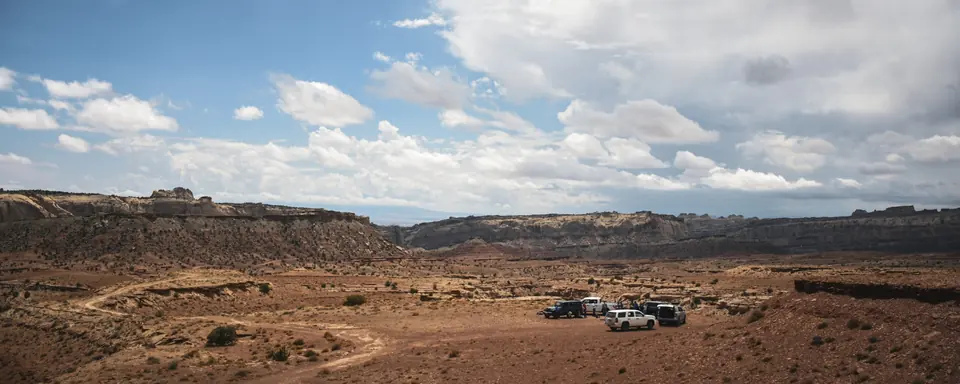
Dispersed camping rules differ on BLM land, national forests, state parks and state trust lands. Use existing campsites, stay the permitted number of days, and follow fire restrictions. In the St. George / Ivins area, check BLM and Sand Hollow State Park rules before planning. Agency-by-agency stay limits and fire rules are in Utah dispersed camping rules.
Use our printable camping checklist.
- 2-person backpacking tent (Amazon search)
- Canister backpacking stove (Amazon search)
- Portable water filter (Amazon search)
Product picks
Sources
- Tread Lightly! T.R.E.A.D. principles
- NPS: Hiking at Canyonlands (water guidance)
- Dixie National Forest: Camping & cabins (dispersed camping rules)
- BLM / Tread Lightly!: ATV Riding responsible recreation tips (PDF)
- Leave No Trace: The Seven Principles
Researched Oct 25, 2026. Rules, specs and prices change; confirm with the source.